
I’m not sure why it took me forever to learn this, but when I did a few months ago, it totally blew my mind! I had always thought that since my municipal recycling program doesn’t take plastic bags, the material must not be easily recyclable. That turned out to be so not true!
In fact, the reason why most curbside recycling programs only accept rigid materials (e.g., aluminum cans, glass bottles, cardboard boxes, etc) is that these materials are generally separated using automated machinery, and soft plastics get jammed too easily in the processing equipment.
So, after reduce and reuse, if you still have soft plastics left around the house, here is how to properly recycle them: bring them to your local grocery stores!

The soft plastic recycling bin in the Whole Foods Market near me 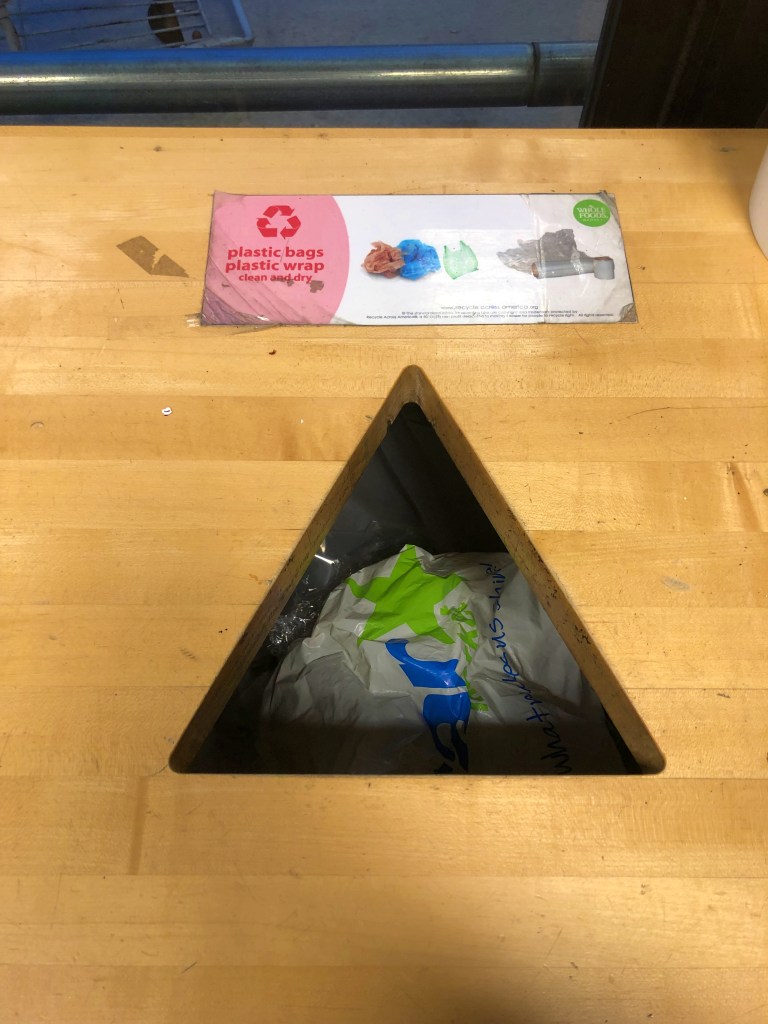
The American Chemistry Council runs an excellent website that allows you to find the retailers near you that take soft plastics. The site also provides clear instructions on what can and cannot be recycled, and what products can be made using these materials.
Typically, recyclable soft plastics (also known as flexible plastics) are made from either high-density polyethylene (HDPE, no. 2 plastic) or low-density polyethylene (LDPE, no. 4 plastics), but if they aren’t labeled, here is a brief guide (adapted from Recyclebank).
| Yes | No |
| Retail bags (clear or glossy) | Cellophane (i.e. crisp plastic that wraps fresh cut flowers) |
| Grocery store bags, produce bags, bread bags | biodegradable produce bags (sometimes tinted green) |
| Sandwich bags, zip-lock bags, cereal box liners (but not if they tear like paper) | Prewashed salad bags, candy barwrappers, chip bags, frozen food bags |
| Bubble wrap and air pillow (popped) | Cling wrap |
| Case wrap (for toilet paper or bottled water) | Zipper bedding packaging |
| Dry cleaning bags | |
| Newspaper bags |

If this information is hard to remember, you could take a picture of this table (or a picture guide like this) on your phone so you can easily check whenever you need. And before the drop-off, make sure the plastics are dry and clean (-ish, of course they don’t need to be pristine, but definitely take out the receipts, etc).
More questions? Mother Nature Network has some helpful tips on how to tell whether the soft plastic you have is recyclable, and How2Recycle has an awesome FAQ about soft plastic recycling,
Happy recycling!


 Sensible Sustainability
Leave a comment